Arena
Arena is the BBC's multi award-winning arts strand. Founded in 1975, Arena continues to produce gold standard documentaries for the BBC and world service.

Arena is the BBC's multi award-winning arts strand. Founded in 1975, Arena continues to produce gold standard documentaries for the BBC and world service.
 E1
E1
Steven McRae, principal dancer with the world-renowned Royal Ballet, is 33 years old and at the pinnacle of his career when he severely damages his Achilles tendon in the middle of a show attended by 2,500 spectators.This is the story of his amazing rehabilitation and the nerve-racking days leading up to his triumphant return to the stage.
 E2
E2
The incredible story of broadcaster, journalist, musician and author Clemency Burton-Hill's recovery following a devastating brain haemorrhage in early 2020.
 E1
E1
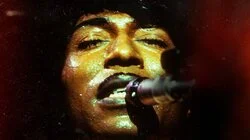
Featuring interviews and exclusive archive footage, this documentary tells the extraordinary story of a music icon: the self-proclaimed architect of rock 'n' roll.
A look at the fashion icon that was Karl Lagerfeld, one of the most flamboyant and recognisable figures in fashion - and one of the most mysterious. His influence was immeasurable, from the Chanel catwalk to the high street - but how many people ever really knew the real Karl Lagerfeld? Weaving investigations in the present with Lagerfeld's biography – illustrated by illuminating and much unseen archive footage – this film shows his profound and lasting effect on those around him, including his beloved cat Choupette.
A look at the relationships and rivalries within The Rolling Stones in their formative years, as well as the creative musical genius of Brian Jones, key to the success of the band.
A profile of artist and activist Nan Goldin, using slideshows, interviews, photography and rare footage to tell the story of her personal fight to hold the Sackler family accountable for the opioid overdose crisis.
The story of original influencer Coco Chanel, whose designs still represent the zenith of female sexuality, style and power.
A look into Kae Tempest's creative process and insights into their life throughout a period of profound personal and artistic change.
 E1
E1
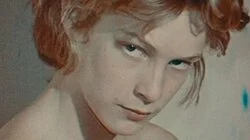
In 1970, film-maker Luchino Visconti travelled throughout Europe looking for the perfect boy to personify absolute beauty as the character of Tadzio in his adaptation for the screen of Thomas Mann's Death in Venice. In Stockholm, he discovered Björn Andrésen, a shy 15-year-old teenager whom he brought to international fame overnight and, as a consequence, changed the course of the boy's life. The remainder of Bjorn's youth was turbulent and intense and took him from the Lido in Venice to London, to a welter of attention at the Cannes Film Festival, and to Japan.Fifty years after the premiere of Death in Venice, Björn takes us on a remarkable journey back through his life in a film composed of personal memories, cinema history, stardust and tragedy - as he makes a late attempt to reconcile with his past and finally get his life back on track.
 E2
E2
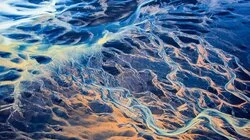
Rivers are the wondrous sculptors of the elaborate landscapes found on planet earth. They wear away mighty mountains, scour rock faces, carve deep valleys, create fertile plains, and then decorate them with their meanderings.‘For eons, running water obeyed only its own laws. To be truly alive, a river must be wild: wilful and unhindered. Yearning for the ocean, its only purpose is to descend.'In many places, rivers are seen as a source of great hope and something to be worshipped. In others they are where people are healed and blessed, where sins are washed away and the dead purified.Rivers are the arteries of the planet. Wherever they travel life, forms can emerge, survive and flourish, including human life. The will of rivers determined our early destiny. They were the transport routes that enabled and nourished the spread of human beings, and that created the boundaries between regions and countries. Just as rivers shaped the landscape, they have also shaped human existence.‘Today, the world's greatest cities all have a river at their heart.'Rivers are fundamental to human existence but are indifferent to human plans and dreams. In flood, they can wreak havoc, and in drought, they can disappear. And so, extraordinary means have been devised to control them and harness their force.‘Today, there is scarcely a river unspanned, undammed or undiverted.'The cost is high in some cases. The greatest dams provide power and prosperity, slake the thirst of millions and allow deserts to bloom all year, but when trapped and static, the water stagnates, and its sediment falls to the dam floor where it is inaccessible to those who depend on the fertility it would otherwise have delivered.‘For all their might though, rivers are fragile: easily harmed and not so easily mended. Time and again, upstream need and upstream greed have led to downstream disaster.'The use of poisons and plastics, and the sheer size of the human population, means that many rivers are living precariously or even fighting for survival. With humanity sharing its fate with rivers, the wash-up will determine the destinies of future generations.‘We must ask ourselves: Are we being good ancestors?'All is not lost – yet. Rivers are irrepressible, and given the chance, possess miraculous powers of recovery. Also, the cycle of renewal continues. Upon vanishing into oceans, the heat from the sun draws rivers up into the atmosphere, ready to fall back to earth reincarnated.
 E3
E3
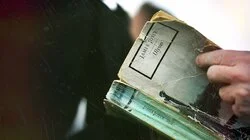
One hundred years after its publication, this reveals the tawdry, shocking, poetic, uplifting and gloriously kaleidoscopic humanity of James Joyce's masterpiece, Ulysses.Banned in the USA for obscenity in 1920, it was finally printed in Paris in 1922 by an American woman who had never published a book before. The film celebrates the crucial role of women, including Margaret Anderson and Jane Heap, a lesbian couple who risked being sent to jail for printing obscene material in America; Sylvia Beach, the American in Paris, who published the first edition from her bookshop Shakespeare and Co; Harriet Shaw Weaver, the English heiress who gave Joyce over one million pounds; and Nora Barnacle, Joyce's wife, muse, and the model for his character Molly Bloom.Ulysses is an encyclopaedia of Irish history, barroom banter, low comedy, newsroom talk, advertising copy and song. Its central character is Leopold Bloom, who wanders around the city observing its everyday life.Set during the course of single day in Dublin in 1904, Ulysses was actually written in Trieste, Zurich and Paris during a time of huge historical upheaval by a penniless teacher of English who would never return to his native Ireland. This film takes us into the heart of the three cities that were home to Joyce and his family during the creation of the book.The film celebrates Joyce's daringly modernist style, spattered with language so scurrilous that it remains shocking to this day, which changed the novel, and writing, forever.With contributions from: Salman Rushdie, Colm Tóibín, Anne Enright, Howard Jacobson, Eimear McBride, Paul Muldoon, John McCourt, Nuala O'Connor, Vivienne Igoe and many others.
2022 marks the centenary of one of the defining poems of the 20th century, 'The Waste Land'. TS Eliot's groundbreaking work first exploded into the world on 15 October 1922 and has continued to resonate with successive generations. But in 2020, there were dramatic new revelations that demonstrated how, behind Eliot's mask, there was a much more personal story to be found within 'The Waste Land' – which can now at last be explored
A visually arresting feature documentary, set in the present but which tells the rich story of Haiti's past, that follows a number of carnival performers in the lead-up to, and during, the annual Jacmel Mardi Gras. This is not the carnival of sequins and sound systems found elsewhere in the Caribbean, but a celebration of rebellion and resistance resonating through the centuries.
 E2
E2
Docudrama that explores the life and creative output of Coventry born-Delia Derbyshire – electronic musician, sound pioneer and female outsider in postwar Britain. From 1962 until 1973, she worked at the BBC's Radiophonic workshop, where she created the iconic Doctor Who theme tune, which remained uncredited in her lifetime. Delia Derbyshire introduced avant-garde electronic sound to a whole generation through the medium of a children's teatime television show. Sound was both a refuge for Delia and a haunting manifestation of something darker. Delia was three years old during the Coventry blitz listening to the electronic sounds of the air-raid sirens against a backdrop of her devastated hometown. Delia describes the sound of the ‘all-clear' and air-raid sirens as her first experience of electronic music.
British-Nigerian poet and activist Femi Nylander travels to West Africa to discover the modern-day impact on its people of atrocities that took place over a century ago.
An examination of the work and the legend of Welsh poet Dylan Thomas, originally broadcast in 2003 to commemorate the fiftieth anniversary of his death.
 E6
E6
How a US lifer survived long-term solitary confinement through a remarkable pen-pal friendship and the making of beautiful little paintings from M&M's.
 E7
E7
An investigation into the extraordinary life and work of B. Catling, an eye-popping insight into the late-flourishing career of a maverick artist, teacher and performer.
 E8
E8
An Arena documentary about the life and work of video art pioneers Steina and Woody Vasulka, which reveals the profound effect they had on the American avant-garde.
 E2
E2
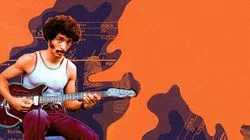
Documentary in which Dan Vernon tries to track down Ike White, a musical prodigy who was serving life in prison for murder when he was given the opportunity to record an album. The resulting record Changin' Times came out in 1976 and following his release from prison, Whiteseemed to be on the path to redemption, but just as he was charting a course to stardom, he disappeared.
 E3
E3
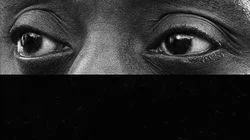
Documentary-maker Raoul Peck uses an unfinished manuscript by James Baldwin, an account of the lives and successive assassinations of civil rights leaders Medgar Evans, Malcolm X and Martin Luther King Jr, as the springboard for this examination of the black experience in America. Narrated by Samuel L Jackson, the film uses Baldwin's words as it explores everything from Hollywood stereotypes to police brutality.
 E4
E4
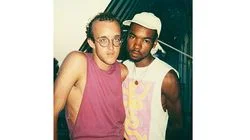
International art sensation Keith Haring blazed a trail through the art scene of 1980s New York and revolutionised the worlds of pop culture and fine art. When he was diagnosed with Aids in 1989, he asked writer John Gruen to write his biography, and the subsequent audio interviews form the basis of this profile. They are combined with archive footage and contributions from friends, critics and contemporaries, telling the artist's story from the sleepy Pennsylvania of his youth to the clubbing scene of New York and to the streets, where he made his instantly recognisable graffiti-like art.
Exclusive testimony reveals the multifaceted man behind the maverick performer Fela Kuti, who created a sound for a continent - afrobeat.
Unstoppable: Sean Scully And The Art Of Everything - which is transmitting as part of the Arena strand - follows abstract painter Sean Scully, one of Britain's richest artists, for a year around the world.From Washington to St. Petersburg and Mexico City to Berlin, the film travels with the artist to 15 different exhibition openings in the world's most prestigious museums and galleries - a journey that culminates in a major show at the National Gallery in Trafalgar Square.
 E2
E2
The film project that artist Peter Beard initiated together with Jackie Kennedy's sister, Lee Radziwill, about her relatives, the Beales of Grey Gardens. Lost for decades, this extraordinary footage focuses on Beard and his family of friends, who formed a vibrant and profoundly influential creative community in Montauk, Long Island in the 1970s. Featuring Peter Beard, Lee Radziwill, Edith Ewing Bouvier Beale and Andy Warhol.
 E3
E3
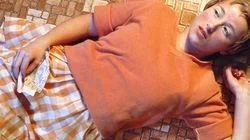
Cindy Sherman is one of the world's leading contemporary artists. She is also notoriously elusive. So, it is a coup for Arena to get this in-depth and revealing audio interview with her. An exuberant weave of art and archive gives us a rare insight into one of the most influential artists alive today.
 E4
E4
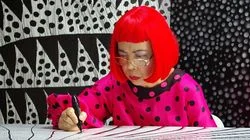
Japanese contemporary artist Yayoi Kusama's work pushed boundaries that often alienated her from her peers and those in power in the art world. Kusama was an underdog with everything stacked against her: the trauma of growing up in Japan during World War II, life in a dysfunctional family that discouraged her creative ambitions, sexism and racism in the art establishment, and mental illness.Kusama overcame countless odds to bring her radical vision to the world stage and created a legacy of artwork that spans the disciplines of painting, sculpture, performance art, film and literature. Born in 1929, Kusama still creates new work every day. Her Infinity Mirror Room installations, the first of which was created in 1965, continue to attract visitors in record numbers.
 E5
E5
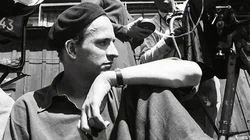
Documentary that exposes a darker, less well-known side of film director Ingmar Bergman. Focusing on 1957, a landmark year in which Bergman directed two films and four plays, Jane Magnusson explores not only the director's filmography but also his, at times, complex and turbulent personal life.Using a wealth of previously unseen archive material, contemporary interviews and a fantastic selection of clips from Ingmar Bergman's vast body of work, this is a fascinating and unflinching study of one of the giants of world cinema.
 E7
E7
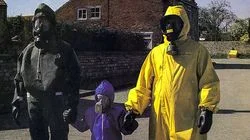
Haunting film about Britain and the nuclear age, from the first bomb tests to our potentially futile preparations for attack during the Cold War.
 E8
E8
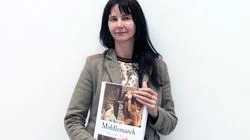
Contemporary artist Gillian Wearing celebrates the legacy of Victorian novelist George Eliot. Just as Eliot's novel Middlemarch explored the lives of ordinary men and women, this experimental film is made up of a diverse cast of people from different backgrounds.
 E1
E1
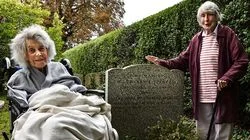
Film exploring the relationship of artist Stanley Spencer's two daughters, Unity and Shirin, as they try to understand and reclaim their father and investigate their family's archaeology. The film examines what it is like to be the children of a genius in a family whose private life has been described as 'the most bizarre domestic soap opera in the history of British art'. At the heart of the film are Stanley's daughters - Unity, 87 and Shirin, who's 91. Their separation, post-Stanley's divorce from fellow artist Hilda was traumatic. So, too, the fiasco of their father's second marriage to self-confessed lesbian, Patricia Preece. This separation took root in the daughters' lives, and only in old age have they come together. The film follows this late-life rapprochement, as Unity boxes up her father's drawings and letters and leaves her London home of 40 years to be with Shirin in Wales.
 E2
E2
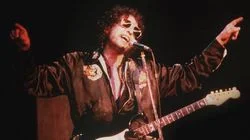
In 1979, Bob Dylan released Slow Train Coming, an album of strictly devotional songs. He declared he had found God in Christianity. For the following two years, accompanied by the finest musicians and gospel singers, he toured with a repertoire solely of songs expressing his new-found faith. A film was made of one of those performances, but it was never released. After 37 years, it is broadcast for the first time - but with a twist. The performance is enhanced by a series of sermons between the songs, all specially written for the film and preached by Oscar-nominated actor Michael Shannon. The result is Bob Dylan's gospel service combining the then of the gig with the now of the message of The Preacher.
 E4
E4
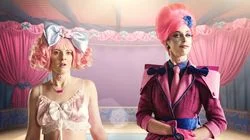
A satirical look at the contradictory pressures faced by women today. It examines how television and social media can help us explore identity, at the same time encouraging women to conform to strict beauty ideals. Multimedia artist Rachel Maclean has created a world that is both seductive and dangerous, a place where surveillance, violence and submission are a normalised part of daily life.Siri wakes to find herself trapped inside a brutalist candy-coloured dreamhouse. Despite the cutesy decor, the place is far from benign, and she and her fellow inmates are encouraged to compete for survival. Forced to go head to head in a series of demeaning tasks, Siri and Alexa start subverting the rules, soon revealing the sinister truth that underpins their world.
 E1
E1
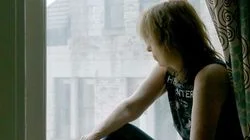
Arena spends the summer with super cool self-confessed rock chick, Chrissie Hynde - shopping for clothes in Paris, hanging out with Sandra Bernhard in New York, life in London and a special trip back to her home town of Akron, Ohio.A thoughtful and intimate portrait of a 'lone, hungry, irritable wolf', featuring a glorious live performance at one of London's newest venues.
The first episode takes us back to 1920s America, where the growth of radio had shattered record sales. Record companies travelled rural America and recorded the music of ordinary people for the first time. The poor and oppressed were given a voice as their recordings spread from state to state.The film introduces the early recordings of The Carter Family, the founders of modern country music, steeped in the traditions of their isolated Appalachian community. It also features Will Shade and the Memphis Jug Band, whose music told the story of street life in Memphis, and laid the foundations for modern day rap and R'n'B.
This episode takes a look at the stories of those early music pioneers whose names have largely been forgotten.In the small South Carolina town of Cheraw, Elder Burch held lively church gatherings which inspired young musicians - including jazz giant Dizzy Gillespie. Gillespie's autobiography cites Burch and his sons as direct inspirations; it is no exaggeration to say that modern music would not look the same without Burch's early influence.The programme takes a look at the gritty songs and musicians that came from the coal mines of Logan County, West Virginia - The Williamson Brothers, Dick Justice and Frank Hutchinson. The hellish conditions of the coal mines inspired them to find a way out, through their music.
 E4
E4
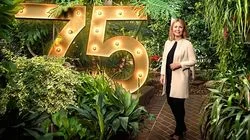
As Desert Island Discs reaches 75, today's custodian of the island, Kirsty Young, introduces the 1982 Bafta-winning Arena classic. It celebrated Roy Plomley and his magical idea on their 40th anniversary.By then, everyone who was anyone had been cast adrift and washed up on Roy's island. Arena's castaways include 40th anniversary guest Paul McCartney, Frankie Howerd, Trevor Brooking, Professor J K Galbraith, Russell Harty and the great comedian Arthur Askey.
The third episode takes a look at the influence of Hawaiian music and more specifically, the steel guitar, which became a central sound to a range of musical styles. When Joseph Kekuku picked up a metal bolt as he wandered down a train track, the bolt hit the strings of his guitar and the sound was born. He perfected his slide to create a new instrument that would travel the world.
The machine that introduced the sounds of America to its people has been lovingly reassembled and now, in the heart of Hollywood, in a perfect recreation of the atmosphere and conditions of America's first ever recording studios, today's music superstars roll the epic on.Elton John, Willie Nelson, Merle Haggard, Alabama Shakes, Jack White, Nas, Ana Gabriel, Beck, Los Lobos and Steve Martin are among the artists who test their skills against the demands of the recording machine that literally made American music. There are no edits, no overdubs and no retakes, and the disc only allows for three minutes of recording time.
 E1
E1
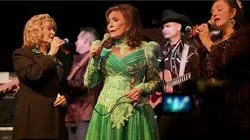
With contributions from her family and fellow musicians, now in her early eighties and still going strong, country music singer-songwriter Loretta Lynn looks back at her life.
 E2
E2
From the silent days of cinema, Shakespeare's plays have often been adapted to the big screen. Film-makers relished his vivid characters and dramatic plots as well as the magic and poetry of his work.At first the results were patchy, then came Laurence Olivier. With Henry V, made to stir patriotic spirit during the Second World War, he perfectly translated Shakespeare from the stage to the screen. He followed Henry V with Hamlet, and both were smash hits. Olivier led the way for directors as diverse as Orson Welles, Kurosawa, Franco Zeffirelli, Roman Polanski, Baz Luhrmann and Kenneth Branagh.The Bard's language has been no barrier, with bold versions of his dramas coming out of Russia, Japan, India and many other countries, not to mention Hollywood's free adaptations in genres as diverse as musicals and science fiction. Already over 30 films worldwide have been produced based on Romeo and Juliet alone.For the first time in a single documentary, Arena explores the rich, global history of Shakespeare in the cinema, with a treasure trove of film extracts and archival interviews with their creators.
 E3
E3
Based on Jon Savage's book 1966: The Year the Decade Exploded, Arena marks the year pop music and popular culture ripped up the rule book in articulate, instinctive and radical new ways. This was the year of Jonathan Miller's Alice in Wonderland, Morgan - A Suitable Case for Treatment, and the year that Strawberry Fields Forever was recorded. Television was still in black and white, but the world outside was bursting with colour and controversy. In America, in London, in Amsterdam, in Paris, revolutionary ideas slow-cooking since the late 1950s reached boiling point. In popular culture and the mass media, 1966 was a year of restless experimentation and the search for new forms of expression - particularly in pop music. This film takes viewers back to that moment in a vivid celebration of the music, films and TV that shaped the 1960s.
 E4
E4
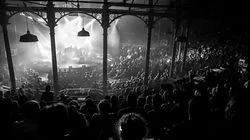
Documentary telling the tragicomic rollercoaster story of a unique venue. On October 15th 1966, the Roundhouse in north London hosted its first gig - the launch of radical newspaper International Times. The audience included Paul McCartney and Marianne Faithfull, along with 3,000 others trying desperately to get in. The result was a glorious shambles. Since then, virtually every big name in rock and alternative theatre has played there. Today it's as vibrant as ever, continuing to attract big names and full houses and running an array of outreach and youth programmes enabling young people to express themselves in the arts.
 E1
E1
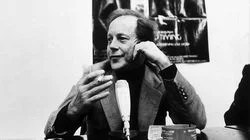
Profile of Nicolas Roeg, examining his personal vision of cinema as evidenced in his films, including Don't Look Now, Performance, Walkabout and The Man Who Fell to Earth.
To celebrate Arena's 40th anniversary, a new film made entirely from its own archive, evoking the one experience common to all - the 24-hour cycle from dawn to dusk to dawn again.
 E1
E1
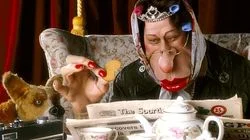
Documentary telling the story of the genesis of the satirical puppet show Spitting Image, with contributions from caricaturists Peter Fluck and Roger Law and producer John Lloyd.
 E2
E2
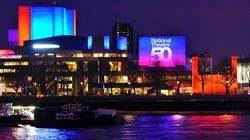
Made especially for schools, this version of the BBC Four Arena programme examines the history and purpose of the National Theatre as it celebrates its 50th anniversary.
 E3
E3
Martin Scorsese's documentary film charting literary, political and cultural history as per the New York Review of Books, America's leading journal of ideas since 1963.
 E1
E1
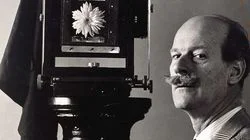
To mark the centenary of his birth, Arena examines the glamorous life and exceptionally long career of pioneering photographer and eccentric English gentleman, Norman Parkinson.
 E1
E1
An exploration of Charles Dickens's contribution to the history of film and television, using archive footage of classic and less familiar adaptations from 1898 to the present day.
 E2
E2
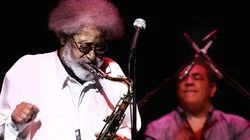
Documentary about the great saxophonist Sonny Rollins, built around his 80th birthday concert, where he is joined by the likes of Roy Haynes, Jim Hall and Ornette Coleman.
 E3
E3
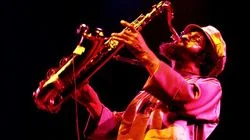
Newly-discovered film footage of tenor sax legend Sonny Rollins at Ronnie Scott's in 1974, with a band featuring guitarist Yoshiaki Masuo and soprano saxophone player Rufus Harley.
 E4
E4
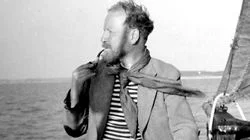
An insight into the private obsessions and insecurities of the author of Lord of the Flies. With contributions from his daughter and son and bestselling author Stephen King.
 E5
E5
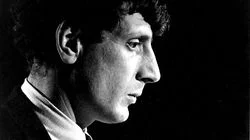
Documentary exploring the life of Sir Jonathan Miller CBE, theatre and opera director, humorist and television presenter. With contributors including Kevin Spacey and Eric Idle.
 E6
E6
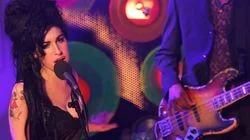
Documentary telling the story of the day Amy Winehouse recorded a stunning acoustic performance in a church in the small Irish fishing village of Dingle in 2006.
 E9
E9
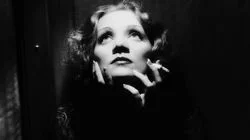
Documentary about the early female movie stars: Greta Garbo, Marlene Dietrich, Rita Hayworth, Marilyn Monroe - immortal goddesses made by Hollywood to reign over the silver screen.
 E10
E10
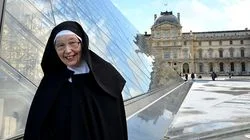
Documentary telling the personal story of Sister Wendy Beckett, who travelled the world telling the story of Christian art and painting in the 1990s, quickly becoming a star.
 E1
E1
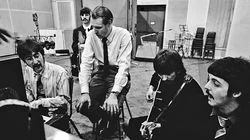
Profile of record producer Sir George Martin, with his wife Judy, son Giles, Sir Paul McCartney, Ringo Starr and Michael Palin among the many contributors.
 E1
E1
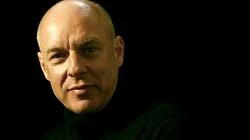
Brian Eno, former Roxy Music keyboardist and a pioneer in ambient music, engages with fellow minds in conversations on science, art, systems analysis, producing and cybernetics.
 E2
E2
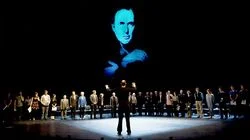
In June 2009, a group Britain's leading actors gathered for one night only to perform a celebration of the work of Harold Pinter at the National Theatre, directed by Ian Rickson.
 E3
E3
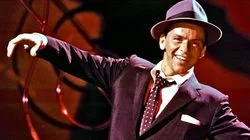
Arena profiles crooner Frank Sinatra, acknowledged as one of the greatest singers of the 20th century, from his early family background to overwhelming showbusiness success.
 E4
E4
Documentary telling the story and examining the legacy of Johnny Mercer, one of America's greatest songwriters and a man at the heart of the Great American Songbook.
 E5
E5
Profile of the influential jazz pianist Dave Brubeck as he approaches his 90th birthday, who had one of the biggest popular hits in jazz history with Take Five.
 E6
E6
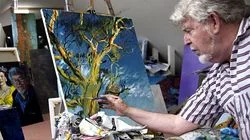
Arena enlists supermodels Lily Cole and Lizzy Jagger and actresses Dervla Kirwan and Emer Kenny to help Rolf Harris achieve a painting ambition.
 E1
E1
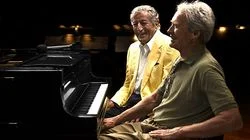
Crooner Tony Bennett reflects on his life with his friend and jazz enthusiast Clint Eastwood. Bennett traces his musical lineage, highlighted by concert footage.
 E2
E2
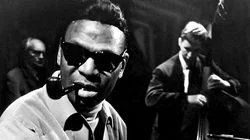
Documentary exploring the meaning and history of cool through the American music that started in the bars of New York and Los Angeles in the 1940s and became known as cool jazz.
 E3
E3
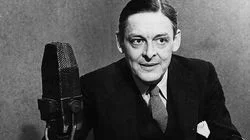
An unprecedented insight into the mysterious life of one of the 20th century's greatest poets, featuring the previously unseen personal archives of his widow, Valerie Eliot.
 E1
E1
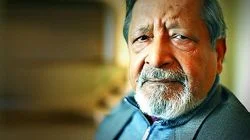
Profile of the Nobel Prize-winning Trinidadian-born British writer, VS Naipaul. Filmed in India, Trinidad and his Wiltshire home, Naipaul remains as incisive, forthright and controversial as ever at the age of 75.
 E2
E2
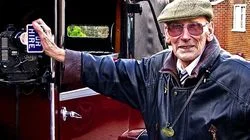
Documentary which gets to the heart of that much-maligned and stereotyped character, the London cabbie, using archive footage, music and film, as well as the drivers themselves.
 E3
E3
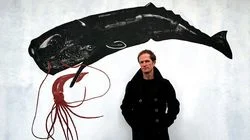
Writer Philip Hoare confronts our fascination with the ocean's mystery animal, the whale. He visits the whaling ports of New England and draws a parallel with the war on terror.
 E4
E4
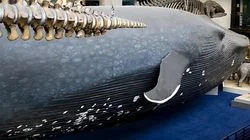
Documentary telling the story of the construction of the much-loved blue whale at the Natural History Museum. As the world marched towards war in 1938, a determined group of men at the museum undertook the unprecedented task of building a life-sized model of the largest creature that has ever lived.
 E5
E5
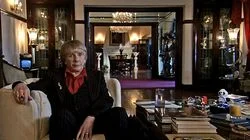
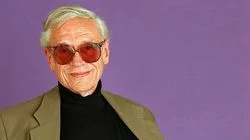
In a rare interview, legendary music producer Phil Spector dissects his songs. His trial for murder in 2007 ended in a hung jury, and court footage provides a vivid counterpoint.
 E6
E6
A host of leading theatrical greats, including Peter Brook, Vanessa Redgrave and John Hurt, pay tribute to the outstanding British actor Paul Scofield.
Documentary about the Tube, the world's oldest underground system, with its own unwritten rules of behaviour and protocol, and used by three million passengers every day.
 E2
E2
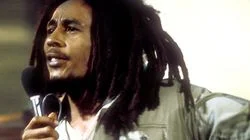
An evocation of 1977 and of the spirit of Bob Marley's most significant album. It's a film about an artist and his world and the impact they had on each other.
Swedish TV producer Marie Nyrerod, broadcaster Melvyn Bragg and French film director Olivier Assayas talk about their meetings with Swedish film director Ingmar Bergman.
Documentary in which reclusive film director Ingmar Bergman talks about his career from his home on the desolate and mysterious Baltic island of Faro. He talks about the childhood that shaped him, of how the art of film was often a comfort to him, of love and death and of his worst demons.
Documentary. Ingmar Bergman, one of the world's most important and influential filmmakers, pays one final visit to Filmstaden, where many of his films were made.
Jazz singer and writer George Melly takes a nostalgic trip through front rooms and backstreets as he reminiscences about the influence of Dada and Surrealism on his early life.
A celebration of British cinema from the 1940s and 1950s. Extracts and stills showcase a wealth of forgotten and overlooked movies.
 E10
E10
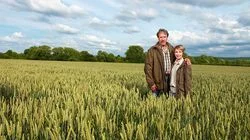
Documentary which goes behind the scenes at The Archers and follows the production team as they put together the 15,000th episode of the world's longest-running radio soap.
 E11
E11
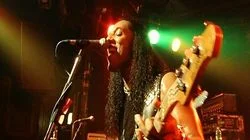
Meet the musicians who perform at Crewe's Limelight Club, where the spirit of rock is alive in the form of tribute acts to the likes of Jimi Hendrix and Kurt Cobain.
Live performances by tribute bands such as Limehouse Lizzy, Are You Experienced, The Jamm and ABCD, at Crewe's Limelight Club.
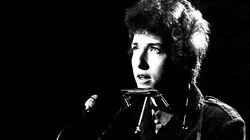
Documentary about the American folk revival, the milieu from which the nascent Bob Dylan emerged in the early 1960s and whose crucible was the Newport folk festival.
 E14
E14
Murray Lerner's documentary features Bob Dylan's performances at the Newport folk festival between 1963 and 1965 - the time when Dylan changed the music of the world.
 E15
E15
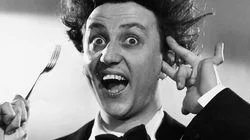
A tribute to Liverpudlian comic Ken Dodd, in which he discusses his career and the influences of his comedy style. Features film clips of his early performances and footage of him on tour in more recent times.
Documentary looking at the phenomenon of sanctity, and how the Catholic Church is the only Christian persuasion with an official saint-making process.
Documentary about legendary country music singer-songwriter Hank Williams, who lived fast, died young and left an enduring legacy. Features interviews with friends and family.
Documentary about the great British painter Francis Bacon, a man whose life was every bit as colourful and outrageous as his art. Contributors include Bacon's sister Ianthe.
Documentary looking at some of the most memorable Arena programmes of the past 30 years. With contributions from Anthony Wall, Alan Yentob, Lesley Megahey and Nigel Williams.
 E8
E8
Documentary celebrating one of London's great characters, the bus conductor. The film tells the stories of five extraordinary conductors from five decades of London's history, rich with period music and archive.
 E2
E2
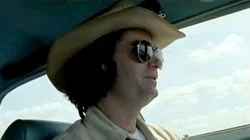
First transmitted in 2004, Jim White takes a road trip into the heart of the poor white American South through a gritty terrain of churches, prisons, truckstops and coalmines.
Documentary which explores the artistry, moral world and furious infighting behind the film The Third Man. Alexander Korda, David O. Selznick, Orson Welles, Graham Greene - the drama behind the scenes is revealed with unlimited access to the original movie.
A celebration of the 25th anniversary of the Secret Policeman's Ball. Contributors include Rowan Atkinson, Stephen Fry and Lenny Henry.
 E1
E1
An examination of the work and the legend of Welsh poet Dylan Thomas in the year of the 50th anniversary of his death.
 E2
E2
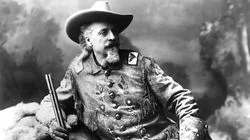
Dramatic reconstruction and archive footage recreates the life of the American Wild West showman and mythmaker, Buffalo Bill.
wo-part Arena special celebrating the life and distinguished career of one of Britain's best-loved public figures. Lord Attenborough's film CV as actor stretches from Brighton Rock to Jurassic Park, while as director he has been responsible for Oh! What a Lovely War, Shadowlands and Gandhi. He has also been integral to the work of many charities, while his support for minority groups has led to the building of a Centre for Disability and the Arts. Part one examines his early career, and follows Attenborough as he visits his childhood home, travels to Brighton and Hove, and reminisces with brothers John and Sir David.
The conclusion to this two-part profile looks at Attenborough's career as Britain's most distinguished film director, whose biopic Ghandi won eight Oscars in 1982, including Best Director. It also explores his other lives as chancellor of Sussex University and vice-president of Chelsea FC and examines the political commitment behind films such as Cry Freedom and 10 Rillington Place.
 E1
E1
Film biography looking at the famous playwright. Pinter's key theme, the room, is explored through the rooms in which he wrote his first series of plays.
 E2
E2
Film biography which explores the relationship between the public and private dimensions of the playwright and actor, following him at work over two years.
A stage play by Harold Pinter in which Pinter himself gives a powerful performance in the central role. Nicolas, who works as a torturer in an unnamed police state, interrogates three members of the same family.
An anxious recluse deals with the pressures of the outside world. A play by Harold Pinter, filmed in New York's Almeida Theatre in 2001
Behind the scenes of Radio 4 comedy shows. Dead Ringers, which made the transition to TV, features spot-on impressions of everyone from George Bush to Anne Robinson. But have the team lost track of who they really are?
A look behind the scenes of Radio 4 comedy shows. Just a Minute has been running for 35 years with Nicholas Parsons as its host. Paul Merton, Clement Freud, Linda Smith and Ross Noble are among the guests attempting to talk on a subject for a minute without hesitation, repetition or deviation.
 E1
E1
A programme exploring the work of crime writer James Ellroy, whose credits include LA Confidential, The Black Dahlia and My Dark Places.
Dame Beryl Bainbridge takes an idiosyncratic tour of the last twenty years of writer and poet Samuel Johnson's turbulent life, focusing on his relationship with Hester Thrale.
 E8
E8
Writer, performer and director, the late Eric Sykes was the renaissance man of British comedy. This film opens the doors of the room that was his creative home for forty years.
First transmitted in 2000 and inspired by the book of the same name, film-maker James Marsh relays a tale of tragedy, murder and mayhem that erupted behind the respectable facade Black River Falls, Wisconsin in the 19th Century.
 E1
E1
First in a two-part documentary examining the turbulent life and career of Beatles manager Brian Epstein. Gay when homosexuality was illegal, a gambler, shopkeeper and failed actor, he was also pop king with a Midas touch who, in the 60s, was as well known as the band he managed.
 E2
E2
Part two of the documentary on Beatles manager Brian Epstein. By the mid 60s, Epstein was lured into the world of gambling, sex and drugs and in 1967 he was found dead in his London mansion at the age of 32.
 E1
E1
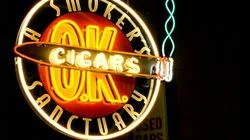
Documentary which follows the story of the cigar - from the tobacco fields west of the Cuban capital of Havana into the factories where poetry and daily newspapers are read aloud to the workers, to Hollywood cigar bars and the gentlemen's haunts of St James's, London. With the worldwide cigar market growing, smoking cigars is perceived as glamorous and yet this is occurring at a time when it is nearly impossible to smoke a cigarette in any public place in the United States. Cigar clubs are opening up in America despite the fact that Cuban cigars are banned. The film looks at the rituals and traditions of cigar smoking, the history of cigars and famous cigar smokers from all walks of life. With Lord Grade, Kenneth Clarke, James Belushi, George Wendt and Peter Weller.
 E1
E1
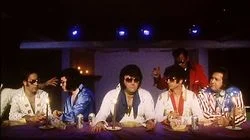
Fried peanut butter and jelly sandwiches are on the menu as Arena documents the life and cuisine of Elvis Presley - whose talent was matched by his appetite
 E8
E8
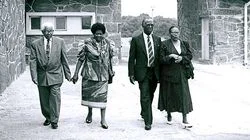
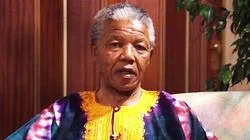
Nelson Mandela and his fellow ex-prisoners recall their incarceration on Robben Island, South Africa's Alcatraz.
Edward Said, a Palestinan writer, academic and exile, talks about his book "Culture and Imperialism" and explains how the attitudes forged over the last 200 years continue to enforce the relationship between the west and the developing world.
To mark his 60th birthday, and the publication of his book "Operation Shylock", author Philip Roth breaks his long silence to discuss his life and his books - not to mention some of the links between the two.
The story behind Lou Reed's classic song celebrating transvestism - Walk on the Wild Side - a description of the world inhabited by Andy Warhol's superstars.
Looking at radio and it's history, Dr Carl Dolmetsch finds out why the pips changed pitch.
Documentary that follows three decades of Soviet space culture, from the glory days of Yuri Gagarin to the saga of Sergei Krikalev, the Soviet citizen who was stranded in space for ten months as the Soviet Union was dismantled.
Billy Wilder discusses his career with German film-maker Volker Schlondorff. From Marlene Dietrich to Marilyn Monroe, Humphrey Bogart to Gary Cooper, Wilder directed the film industry's greatest legends.Normally a private man, here he reminisces about his early years in Hollywood with fellow emigres Fritz Lang and his mentor, Ernst Lubitsch, and describes working with Dietrich on his emotional return to postwar Berlin.
Second of three in-depth conversations with film director and writer Billy Wilder. He recalls his memories of the great Hollywood stars - 'Mae West walked out of the door all white gold and feathers. She looked like a locomotive.' He also talks about working with silent film star Gloria Swanson on Sunset Boulevard, the tensions of working with Humphrey Bogart and the consummate artistry of Gary Cooper.
Last of a special three-part presentation in which American director Billy Wilder discusses his career. He remembers working with Marilyn Monroe on Some Like It Hot "With Monroe life was a surprise - sometimes she knew eight pages of dialogue by heart, sometimes she had a total block."He discusses the craft of screenwriting, the problems of working with Raymond Chandler and Agatha Christie, and the creative pleasure of improvising with his lifelong collaborator, I.A.L. Diamond.
 E4
E4
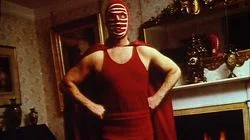
When pop artist Peter Blake confessed that his fantasy was to be the mysterious masked wrestler Kendo Nagasaki, little did he know what the consequences would be.
A profile of the late Linda McCartney, focusing on her career in photography.
 E1
E1
Following his release from prison, Nelson Mandela opens up about his life and the turbulent times he's faced in this rare and momentous interview with Arthur Miller.
Documentary about Joe Meek, the influential homosexual pop composer and record producer who died in dramatic circumstances in 1967.
Radio Caroline, founded in 1964 by Ronan O'Rahilly, gave many DJs their first break, including Tony Blackburn. Arena traces the origins of this broadcasting phenomenon of the 60s which is threatened with extinction by the government's new bill.
 E6
E6
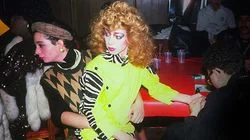
A vibrant snapshot of the 1980s through the eyes of New York City's African American and Latinx Harlem drag ball scene.
 E7
E7
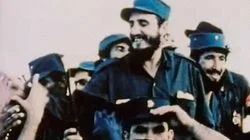
Havana has a dilapidated ruined beauty - decaying grandeur alongside squalor with a string atmosphere of Africa and Old Spain. Despite the political turmoil of Cuba's last 30 years, its people remain among the most imaginative and fascinating in the world. Under the dictatorship of Castro, Cuba has become a highly regulated state to say the least. Director Jana Bokova persuaded the citizens of Havana to talk about their lives, their city and Cuba, despite their anxieties and fears about opening up to a foreign film crew. The film goes beneath the skin of this legendary city, particularly through its extraordinarily rich music which enables the people to express their true attitudes and feelings. It also visits Little Havana in Miami, 90 miles away, home to some of the one million exiles to have left Cuba in the last 30 years.
 E8
E8
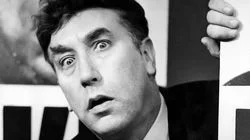
Documentary about the life of Frankie Howerd, with help from friends and colleagues and including highlights from his TV and film career.
Profile celebrating the centenary of the famous author Agatha Christie's birth. Looking at her life, her character and the key moments in her childhood that influenced her writing.
 E2
E2
1989 documentary which takes a look at Europe's most successful holiday resort, famous for its Tower, illuminations, landladies and party political conferences. Includes interviews with Norman Tebbit, John Cole, Paul Theroux and Tony Benn.
 E1
E1
First transmitted in 1988, Arena presents a documentary programme exploring the life of Woody Guthrie, the travelling American singer-songwriter.
Arena travels the length of Broadway, along the home of some of the first white settlers in America, exploring the myths and legends that surrounded the Great White Way.
 E6
E6
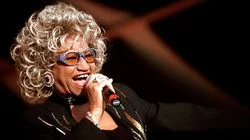
Profile of the legendary Cuban salsa singer Celia Cruz, who moved to New York and rose to international fame with the Latin bands of Tito Puente and Johnny Pacheco.
 E3
E3
Alan Yentob interviews TV dramatist Dennis Potter about his work through the years, touching on subjects such as why and how he started writing and his attempt to enter politics.
In this first episode, Waugh's early years are explored from his childhood and Oxford University days through to his first failed marriage and his early writing success with classics such as Decline and Fall.
This second episode explores Waugh's time in Africa as a journalist and spans the Second World War. After years of negotiating with the church of Rome, Waugh is finally free to marry his second wife Laura.
The final episode examines Waugh's deteriorating health in his latter years.
Traces the colourful story of the seductive and mysterious dance, the tango. Originating from Buenos Aires, the tale is told through the work of poets, dancers and musicians.
 E15
E15
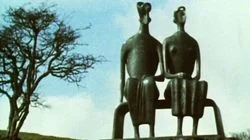
Speaking from Henry Moore's own studio in Perry Green, Hertfordshire, John Read shares his personal memories of the artist he filmed six times over 28 years.
 E4
E4
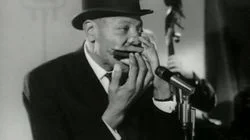
First transmitted in 1985, Blues Night presents rare footage of the harmonica blues player Sonny Boy Williamson.
 E5
E5
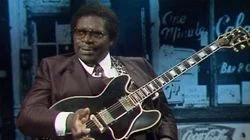
First transmitted in 1985, John Walters talks to B.B. King - aided by his guitar Lucille - about his extraordinary life, from a childhood picking cotton in Mississippi to worldwide stardom.
 E6
E6
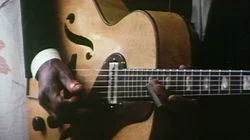
First transmitted in 1985, Harley Cokliss' classic blues documentary includes performances by Muddy Waters, Junior Wells and Buddy Guy, and shows how the tough urban music of Chicago developed out of the original rural blues.
 E7
E7
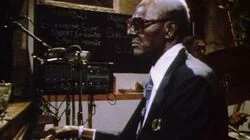
First transmitted in 1985, the great Chicago broadcaster and journalist Studs Terkel and pianist Blind John Davis meet in a downtown bar to discuss and play the blues. This interview was shot for "Omnibus: Studs Terkel's Chicago" but not shown in the final programme.
 E8
E8
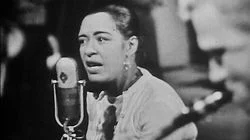
First transmitted in 1985, this medley of the blues features Fred McDowell, Sonny Terry and Brownie McGhee, Lead Belly and Billie Holiday.
 E9
E9
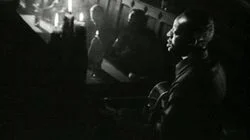
First transmitted in 1985, hard blues meets film noir as Big Bill Broonzy sings and plays in a Belgian nightclub back in the 1950s.
Documentary looking at the short but brilliant career of legendary rock'n'roll star Buddy Holly. Features interviews with contemporaries and fans including backing band The Crickets, The Everly Brothers, Keith Richards and Paul McCartney.
Arena presents a concert by the legend of rock 'n' roll himself. Jerry Lee Lewis doesn't sound like anybody else - the voice, the piano and the on-stage antics make an unforgettable combination.
 E18
E18
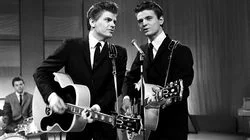
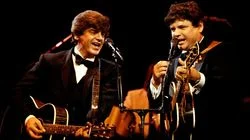
1984 film about the Everly Brothers, among the most successful and revered of the early rock 'n' roll giants, who influenced the Beatles, Simon and Garfunkel and the Beach Boys.
 E17
E17
1983 reunion concert by the Everly Brothers following their ten-year split. They chose the Royal Albert Hall as they had treasured memories of playing there with their father Ike.
 E6
E6
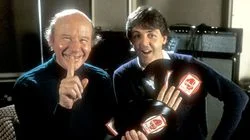
First transmitted in 1982, Arena celebrates Roy Plomley's Desert Island Discs with the help of many celebrity castaways, including Frankie Howerd, Russell Harty, Trevor Brooking, the Lord Mayor of London, Professor JK Galbraith and Arthur Askey. The special guest for the 40th anniversary programme was Paul McCartney who was also a fan of the show: 'I love its homeliness. It conjures up the best in traditional British pleasure, like the great British breakfast. It's an honour to be asked'.
 E8
E8
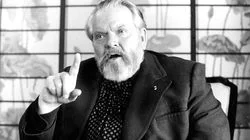
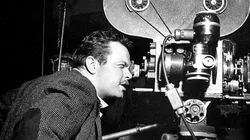
Profile of Orson Welles, looking at his life and career in theatre, radio and particularly film. This part deals with his work up to Touch of Evil.
 E9
E9
Second of a two-part profile of Orson Welles, looking at films including The Trial, Chimes at Midnight, The Immortal Story and F for Fake and discussing his many unfinished projects, including The Other Side of the Wind and Don Quixote.
Dramatist Mike Leigh talks to Arena about his work, and demonstrates his unique processes of building the characters of his dramas.
Portrait of playwright Joe Orton, murdered by his lover Kenneth Halliwell at the peak of his career in 1967.
 E1
E1
Tthis documentary programme looks at New York's Chelsea Hotel, a legendary haven for some of the 20th Century's greatest talent, from Mark Twain to Dylan Thomas. With appearances from Andy Warhol and William Burroughs, who have dinner in the room where Arthur C Clarke wrote 2001, and Quentin Crisp, who lived in the hotel for more than 35 years.
A look at the roles in the rock world of John Peel and John Walters, his radio show producer, in championing new musical directions.
Documentary about the great American realist painter, Edward Hopper. His subject is the face of America - haunting, unforgettable images of late-night bars and lonely hotel rooms.
For the past ten years Peter Brook and his unique company of actors have travelled the world with a series of extraordinary theatrical ventures. The last stage of their journey was Australia. Here, in a disused quarry in the hills above Adelaide they perform some of their most popular plays, and a remarkable meeting takes place with tribal Aboriginal performers who have travelled 1,000 miles to see a production of The Ik. This story, of the breakdown of a traditional tribal community, provides a moving parallel to the problems faced by the Aborigines themselves.
Tonight, from a converted cowshed in the wilds of Scotland, Arena presents The Smallest Theatre in Great Britain. Immortalised in the Guinness Book of Records, Barrie and Marianne Hesketh have for the past 17 years been the sole designers, directors and cast for every production, including their famous two-man version of The Tempest. It seems nothing is impossible,
There were these five guys round the table: the Lightweight Boxing Champion of California; an expert on Pre-Columbian art; an honorary lieutenant in the Mexican army; an architect admired by Frank Lloyd Wright ; and a man of whom Marilyn Monroe said, ' No woman can be around him for long without falling in love'. What had they in common? They were all JOHN HUSTON , who also happened to direct The Maltese Falcon, The Treasure of the Sierra Madre, The African Queen, The Misfits and 25 others. At the age of 74 he started work last week on the$30-million screen version of Annie. Gavin Millar visited him at his Mexican hideaway to mark the publication of his autobiography An Open Book.
The leading writer of his generation, Amos Oz is one of the most controversial figures in Israel today. Born in the fanatical atmosphere of Jerusalem in the last years of the British Mandate, he grew up with the Israeli state through the War of Independence and Suez. Arena filmed AMOS oz in Jerusalem; he takes a walk through 30 years of Israel's history and talks about the fears and aspirations of a new generation of Israelis,
A look at the legend of 'Superman' and its portrayal in comic books and films.
A contrast in visual style: the art of Radio Times and the jaundiced eye of Private Eye. Arena raids the Radio Times archives and talks to long-term contributor Eric Fraser, and watches the latest edition of Private Eye, with its maverick visual style, take shape.
Salman Rushdie, author of Midnight's Children, winner of the Booker Prize 1981, talks about India and the autobiographical elements in the book.
 E4
E4
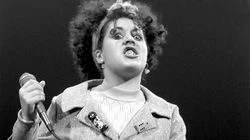
1979 film portrait of the late New Wave singer-songwriter, Poly Styrene.
An investigation of the appeal and power of the popular song My Way, which was written by Paul Anka and was recorded by many artists, including Frank Sinatra, Shirley Bassey, Elvis Presley and Sid Vicious. Contributors include Paul Anka, George Brown, Barry John and Dorothy Squires.
 E23
E23
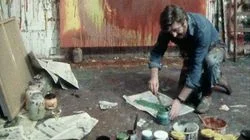
As a major retrospective of his work opens in London, Hoyland faces hostile criticism, starts a new painting and explains why, in his bleaker moments, painting can seem little more than ' flicking away in a corner with a feather duster '.
Henry Moore confronts the anatomical drawings of Leonardo Da Vinci & talks about them in relation to his own life-long study of the human body. Also George Melly takes a day trip which includes a show of Dada & Surrealism at Hayward Gallery.
The making and performance of a play reflecting the conflict between hand-loom weavers of the North and the newly mechanised world of the Industrial Revolution.
Deborah Norton returns with reports, interviews and extracts from what is liveliest and best in the British theatrical scene.
Arena reports on new exhibitions and activities around the country and brings work by artists and designers into the Arena studio.
Jonathan Miller introduces this week's look at what is most stimulating and enjoyable on the theatrical scene.
This week, Arena features American photographer Paul Strand , the subject of an important new exhibition at the National Portrait. Gallery opening on 30 January, and a short season of films at the NFT. Strand is now considered by many as one of the major artists of the 20th century and his work has done much to establish photography as one of the fine arts. The programme also looks at some recent trends in British photography : the move away from photo-journalism towards a more independent and personal approach, and towards a new kind of social commitment focussed on the community.
Arena goes to Scarborough for the British premiere of a new Alan Ayckbourn play, Just Between Ourselves. AYCKBOURN is the only contemporary playwright ever to have had five different plays running simultaneously in the West End. Here is a chance to watch the author himself directing his latest play and to follow this production through from the first read-through to dress-rehearsal.
An increasing number of visual artists, reacting to the gap which divides them from the mainstream of ordinary life, have abandoned their ivory towers to work more directly with people. This week Arena looks at aspects of community art and includes a film on the work of painter Keith Grant , ' artist-in-residence ' at the New Charing Cross Hospital.
What is great acting? Claire Bloom and Kenneth Tynan discuss three performances. Amongst them Peggy Ashcroft in an extract from BECKETT'S Happy Days and Judi Dench in SHAW'S Too True to be Good, plus a rare treat, filmed on Broadway - Irene Worth in her triumphant success in TENNESSEE WILLIAMS'S Sweet Bird of Youth.
A fortnightly look at the world of the visual arts, fashion, photography and design. Tonight's Arena is about some of the latest developments in sculpture and features Robert Janz and Dante Leonelli , two artists concerned with incorporating a fourth dimension, the dimension of time, to their work.
This week, the director Ronald Eyre looks selectively and critically at what's coming on, or doing well, and recommends his own personal ' best buy.'Kenneth Tynan talks to Laurence Olivier about Lilian Baylis, the eccentric founder of The Old Vic. Kenneth Tynan says: "The theatre is the cockpit of society: it is here that ideas are argued out, laughed at and worked over. It is our job in Arena: Theatre to make the theatre accessible and comprehensible to the largest possible audience. We hope to celebrate plays, players and playwrights as they are working now and we shall also pass judgement of our own. When a dictatorship takes over, the first cultural institution to be suppressed is the theatre."
This week Arena features a unique event in the arts calendar: the opening of the Space Studios with 150 one-man shows in 20 days.
Including an extract from a new play, Stripwell, which opened at the Royal Court Theatre, London, last night, and an interview with the author, Howard Barker. Kenneth Tynan tackles a topical issue, and we investigate why Birds of Paradise has been packing them in on Bournemouth Pier.
This week's guest columnist is cartoonist Mel Calman on the New Yorker magazine and its artists. Arena reports on new exhibitions and activities around the country and brings work by artists and designers into the Arena studio. This week's programme features Richard Hamilton at the Serpentine Gallery and a new documentary exhibition from Jarrow
On the first night of The Playboy of the Western World, a National Theatre production at the Old Vic, Arena reviews the National Theatre's past and present. Its magnificent new home on the South Bank is due to open in March. There Peter Hall , the present artistic director, talks to Kenneth Tynan , who worked as the theatre's literary adviser for 11 crucial years. Presented by Michael White
This week's guest columnist is Observer critic William Feaver on Painting the End of the World. Arena reports on new exhibitions and activities around the country and brings work by artists and designers into the Arena studio. This week's programme features Bill Brandt's selection of landscape photography at the Victoria and Albert Museum and the best of science fiction illustration.
A look at what is topical, urgent and most interesting in the British theatre. There will be an extract from a current play and Kenneth Tynan will have some strong words to say about the theatrical events of the fortnight.
This week's guest columnist is Shirley Conran. Arena reports on new exhibitions and activities around the country and brings work by artists and designers into the Arena studio. This week's programme features the work of Barry Lategan , top fashion photographer and creator of the 60s image of female beauty, filmed at work with models including his most famous photographic subject, Twiggy
Introduced this week by Deborah Norton who makes her own selection of the most lively events on the British stage during this fortnight. There will be an extract from a current play and Kenneth Tynan gives his own personal views on the theatre.
This week's guest columnist is Terry Measham of the Tate Gallery on Landscape into Art.Arena reports on new exhibitions and activities around the country and brings work by artists and designers into the Arena studio. This week's programme concentrates on the work of contemporary British artists and features the work of painter and poet Charles Tomlinson.
The most famous male dancer since Nureyev, Mikhail Baryshnikov, will appear in the New Year in a BBC Television Gala Performance. We filmed him rehearsing for this with Natalia Makarova. This is the first time he has ever been seen on television. Kenneth Tynan draws a portrait of the actor Albert Finney, who opens as Hamlet at the National Theatre tonight.
This week, Forgotten Heritage This month sees the end of European Architectural Heritage Year. A report by the SAVE Campaign comes out this week, which contains the alarming news that, in the first six months of this of all years, 182 buildings listed for their historical or aesthetic value were destroyed. Why does the ' spirit of our age' seem to be demolition? Film-maker Roger Graef and journalist Simon Jenkins explore our ' forgotten heritage,' and some of the ways in which it might be conserved and put to new use.