Hidden Treasures of the National Trust
A look behind the velvet rope at the country's most beautiful and historic homes with the people saving Britain's priceless heritage.
A look behind the velvet rope at the country's most beautiful and historic homes with the people saving Britain's priceless heritage.
 E1
E1
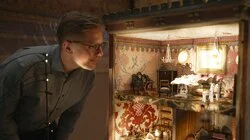
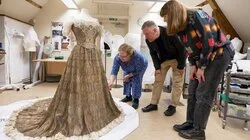
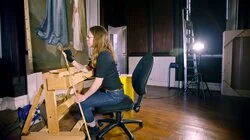
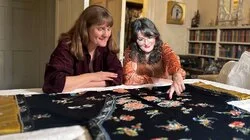
From a fragile silk robe and a wartime wall painting to a writer's handmade timepiece, the hidden treasures in these two houses reveal the stories of two of Britain's most celebrated authors – and the expert teams racing to preserve them.
 E2
E2
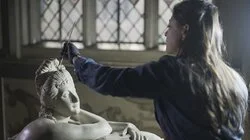
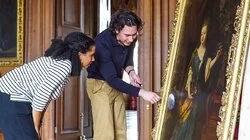
From scandalous society portraits to glittering royal furniture and the restoration of lost landscapes, this episode reveals how the legacy of the Grand Tour continues to shape Britain's great houses – and the work being done today to protect their remarkable stories for the future.
 E3
E3
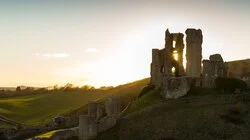
From a windswept island chapel battered by the North Sea to a quiet Welsh farmhouse that shaped the future of a language, this episode travels to two remote National Trust sites whose powerful stories have inspired centuries of pilgrims, revealing the delicate conservation work protecting their remarkable stories.
 E4
E4
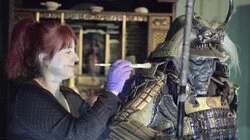
From Charles Paget Wade's collection of samurai armour in Snowshill Manor to the Harpur-Crewe family's immense natural history collection at Calke Abbey, this episode explores the remarkable world of collectors – and the dedicated teams working to protect their extraordinary legacies of curious collectibles, rare wildlife and living heritage.
 E5
E5
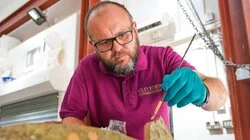
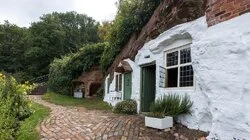
From child labour contracts and industrial machinery to the unusual homes of working families carved into the rock, this episode uncovers the hidden lives of ordinary working people – and follows the teams making sure their stories are never forgotten.In a quiet Cheshire valley beside the River Bollin stands Quarry Bank Mill. Built in 1784 by Samuel Greg, the mill became a powerhouse of the Industrial Revolution during which new machinery transformed cotton production and helped change Britain forever.At the heart of the mill is one of last working examples of one the most important of these machines: The Spinning Mule. The Spinning Mule could turn raw cotton into yarn faster than ever before, helping make cotton clothing affordable far beyond the wealthy elite. But keeping this giant machine alive is a full-time job, and every year the Mule must be completely dismantled, cleaned and rebuilt. Technical demonstrator Rex and the team must strip the Mule into hundreds of pieces and service every part before getting the machine spinning again.As well as the machines, the other crucial part of the mill's productivity were the people. Now a rare new object has arrived at the mill that tells the story of just one worker – an apprentice indenture from 1785 belonging to thirteen-year-old Thomas Payne.The fragile contract signed him into years of labour at Quarry Bank, part of a system that brought orphaned and vulnerable children into the mills as cheap workers. It is one of the few surviving records of an individual child apprentice. But the document is badly torn and close to falling apart. Conservator Sharon must carefully clean the fragile paper, repair major tears and stabilise it for display. For the team, preserving this single piece of paper means giving one forgotten child a place in history.Meanwhile, in Staffordshire, another working-class story is being protected at Kinver Edge. Here, a row of remarkable houses carved directly into the sandstone hillside once sheltered generations of local families. The last residents of these real-life hobbit homes moved out in 1960s after which the houses fell into serious decline.Since 1989, the National Trust has been carefully restoring the cottages to how they once were, from making them water tight to sourcing replica furniture, fixtures and fittings. Now the final house to be restored, Martindales – once home to local postman Harry Martindale – is nearly complete, but one vital feature has been missing: a kitchen range, the true heart of the home.Today, finally, the missing piece of the jigsaw has arrived - a salvaged historic range that has recently been donated by a member of the public. However, it still needs to be fitted - no easy task when nothing about the rock houses is regular and the walls and floors are carved from the bare rock.It's not just the houses that the National Trust care for at Kinver. Outside, along the sandstone ridge, a dedicated team of rangers are protecting another very special feature of Kinver Edge – its rare heathland habitat and the myriad of plant and animal species that live there.
 E6
E6
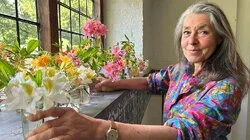
Secret laboratories and historic seedlings, topiary cats and exquisite portraits hidden behind two famous gardens lie the legacies of two extraordinary designers.Overlooking the Sussex Weald stands Nymans, the half-ruined manor house and famous garden once home to the Messel family. Today it is celebrated for its romantic ruins and spectacular planting, but Nymans is preparing to celebrate one of its most famous residents – the legendary designer Oliver Messel, whose magical stage sets transformed British theatre, opera and film in the 20th century. A major exhibition is bringing together props, costumes and personal objects from across his extraordinary career.At the centre of the exhibition is a newly acquired portrait of Oliver's beloved sister Anne painted in 1932. The painting captures both Anne's beauty and the close bond she shared with her brother, while also reflecting the glittering world of the "Bright Young Things" – the group of glamorous young aristocrats and socialites with whom they mixed and partied. But years of dirt and flaking paint have dulled its brilliance, and conservators must carefully clean and restore the canvas before it can take pride of place in the exhibition.Meanwhile in Surrey, another creative visionary's legacy is being celebrated at Munstead Wood – the home and garden of Gertrude Jekyll, one of the most influential garden designers in British history. Her bold planting schemes changed the look of British gardens, replacing rigid Victorian formality with softer, naturalistic borders inspired by the English countryside.The National Trust acquired the property in 2023 and has taken on the enormous challenge, begun by previous owners after the great storm of 1987, of restoring the garden to reflect Jekyll's original vision. Head gardener Annabel is working from Jekyll's original plans to rebuild her famous borders, while topiary expert Darren tackles one of the garden's most unusual survivors – Jekyll's much-loved yew cat.First clipped into shape more than a century ago, it has grown wild over the decades. Restoring this overgrown feline requires patience, precision and more than a little imagination.Few others of Jekyll's original plants survive, but those that do have a special status, called the "antiques of the garden" by Annabel. Amongst these antiques are the amazing collection of Azaleas and to preserve them for the future the National Trust is attempting to clone them through a technique called micropropagation. This involves taking cuttings to their bio-secure Plant Conservation Centre in the West Country, also home to many other important seedlings such as the Sycamore Gap tree and the apple tree that inspired Sir Isaac Newton's theory of gravity.Inside the house, repairs are also being made to Jekyll's beautifully crafted workshop door, created with architect Edwin Lutyens and decorated with delicate inlays of bone, mother-of-pearl and abalone – a reminder that Jekyll's talents stretched far beyond planting design.